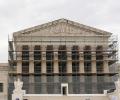
The US Supreme Court has denied the application of Tahawwur Rana, a Canadian national of Pakistani origin accused in the 2008 Mumbai terror attacks, seeking a stay on his extradition to India. Rana, currently detained in Los Angeles, had submitted the application after Associate Justice Elena Kagan initially denied it. Despite a renewed appeal, the Supreme Court ultimately rejected the request.

Mumbai terror attack accused Tahawwur Rana has moved an 'emergency application' with the United States Supreme Court against his extradition to India, claiming that he will be tortured there since he is a Muslim of Pakistani origin.

A leading British law firm has challenged the fairness and legality of the trial and death sentence handed down to deposed Bangladeshi Prime Minister Sheikh Hasina, citing violations of international law and a politically hostile environment.

The Congress party has claimed credit for the extradition of Tahawwur Rana, an accused in the 2008 Mumbai terror attacks, from the US, saying the Modi government did not initiate the process and merely benefited from the "mature, consistent and strategic diplomacy" begun under the UPA. Former Home Minister P Chidambaram said the government did not secure any breakthrough to make the extradition possible, nor is it the result of any grandstanding. He added that it was a testament to what the Indian state can achieve when diplomacy, law enforcement and international cooperation are pursued sincerely and without any kind of chest-thumping. Chidambaram detailed the UPA government's efforts in securing Rana's extradition, citing the registration of a case against him in 2009, diplomatic pressure on Canada and the US, and continued efforts despite legal setbacks. He highlighted the role of the UPA in securing Rana's conviction for other terrorism-related offences and the cooperation between the US and Indian agencies in gathering evidence and securing his extradition. The Congress leader further stated that it was the UPA's groundwork that paved the way for Rana's extradition, even after the change in government in 2014.

A Bangladesh court has convicted former Prime Minister Sheikh Hasina and British MP Tulip Siddiq in a land scam case, sentencing them to imprisonment. The verdict also includes other government officials and Hasina's sister, raising questions about extradition and political motivations.
Tahawwur Rana, accused in the 2008 Mumbai terror attacks, has renewed his plea for a stay on his extradition to India, citing health concerns and alleging potential torture. He argues that his extradition would violate US law and the UN Convention Against Torture. Rana's lawyers claim he is at risk of being subjected to torture in Indian detention facilities due to his Pakistani origin, Muslim religion, and medical conditions. The US Supreme Court had previously denied his emergency bid for a stay, but he has now appealed to Chief Justice John Roberts. The US government has declined to provide information on any commitment from India regarding Rana's treatment, further fueling his concerns.

India's National Investigation Agency is probing into his role in the 26/11 attacks carried out by Pakistan-based Lashkar-e-Taiba terrorists in 2008.

The bail plea of fugitive diamonds trader Mehul Choksi, wanted in India in connection with over Rs 6300-crore fraud in the Punjab National Bank (PNB), has again been turned down by a court of appeal in Belgium, just ahead of his extradition hearing before a court in that country, officials said. The court rejected the appeal on strong reasons conveyed by the CBI to the Belgian prosecution that Choksi had escaped from many jurisdictions earlier as well to evade legal proceedings and may flee to another country if let out on bail, they said.

Rediff.com's Vipin Vijayan, who is travelling with Prime Minister Manmohan Singh to Thailand, reports on the seven treaties signed between New Delhi and Bangkok on Thursday.
Tahawwur Rana, accused in the 2008 Mumbai terror attacks, has renewed his application to the US Supreme Court seeking a stay of his extradition to India. The Supreme Court will hear the application next month. Rana, currently detained in Los Angeles, claims his extradition would violate US law and expose him to torture in India due to his health and Muslim background. The US government has denied these claims and authorized his surrender to India, citing the Extradition Treaty between the two countries. The Supreme Court's decision will determine if Rana will face justice in India or remain in the United States.

In more than a decade since 2002, 60 fugitives were extradited or deported by foreign governments to India, which received a major victory in its fight to bring the perpetrators of the 26/11 Mumbai attacks to justice when a US federal court agreed to the extradition of Pakistani-origin Canadian businessman Tahawwur Rana to the country.
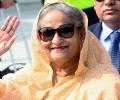
Bangladesh's interim government has requested India to extradite deposed Prime Minister Sheikh Hasina, who has been living in exile in India since August. The request comes after the Bangladesh-based International Crimes Tribunal issued arrest warrants for Hasina and several others for "crimes against humanity and genocide." The interim government has cited an existing extradition treaty between the two countries as grounds for the request. Hasina has accused the interim government of perpetrating "genocide" and failing to protect minorities since her ouster.

'Pakistan's role in Bangladesh will always be negative, since it's a one-point agenda is hostility against India.'
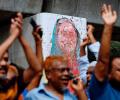
'What signal would we be sending -- that we don't stand by our friends?'

The Indo-US extradition treaty may pose a major hindrance to India's efforts to produce David Headley and Tahawwur Rana before a Delhi court over the Mumbai attacks, as it does not allow handover of a person already convicted or acquitted for the offence he has been sought for.

External affairs ministry spokesperson Arindam Bagchi said the request for extraditing Saeed along with certain documents was recently sent to Islamabad.
Rejecting India's demand to extradite the perpetrators of the Mumbai terror attacks to the country, Pakistan has said such a move will be 'harmful' for it as there was no extradition treaty between the two neighbours. Qureshi said Pakistan had conducted its own 'independent investigations' into the charges of Pakistani elements involved in the Mumbai terror strikes and that it will do everything in the interests of India and Pakistan.

The report evaluates the likely military, strategic and international fallout for China under scenarios ranging from a "major war" to a "minor conflict" with Taiwan, Focus Taiwan said.

The FBI is offering a reward for information about an Indian national wanted in connection with the 2017 murder of an Indian woman and her son in New Jersey. US authorities are urging India to extradite the suspect, Nazeer Hameed.

The Supreme Court is considering entrusting the CBI with the investigation into digital arrest cases, citing the magnitude and pan-India spread of such crimes. The court has sought details of FIRs registered in different states and union territories and is monitoring the progress of the investigation.

With the US filing civil and criminal charges against billionaire Gautam Adani and seven others over a multi-million-dollar bribery scheme, a prominent attorney here has said that the case could escalate significantly, potentially leading to arrest warrants and even extradition attempts. Adani, India's second-richest man, and seven others, including his nephew Sagar Adani, have been charged by the US Department of Justice with paying bribes to unidentified officials of state governments in Andhra Pradesh and Odisha to buy expensive solar power, potentially earning more than $2 billion in profit over 20 years.

The CBI has significantly increased the rate of fugitive repatriation, bringing back 134 individuals in the last five years, doubling the number from the previous decade. This success is attributed to enhanced diplomatic efforts, technological advancements, and improved coordination with Interpol.

Overriding the Biden administration's appeal, a US court has ordered a stay on the extradition of Pakistani-origin Canadian businessman Tahawwur Rana, to India where he is facing a trial for his involvement in the 2008 Mumbai terror attacks.
Filing the Writ of habeas corpus through his attorney, Rana, 62, challenged his extradition by the Government of India. Rana's extradition would violate the United States-India extradition treaty in two respects, his attorney argued.

India on Thursday said it will pursue an extradition request with Canada for Arsh Singh Gill alias Arsh Dalla, the de-facto chief of the Khalistan Tiger Force, following his arrest in that country.
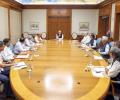
The Cabinet Committee on Security (CCS) met on Wednesday under the chairmanship of Prime Minister Narendra Modi and firmed up the responses to the terror attack.
The next hearing to assess the progress in the case will be held at Westminster Magistrates' Court on September 14.
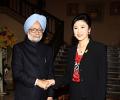
After two decades of negotiations, India and Thailand have finally put ink to paper and sealed the extradition treaty between the two countries, says Rediff.com's Vipin Vijan, who is travelling with Prime Minister Manmohan Singh to Thailand

The National Investigative Agency on Thursday registered a case against Pakistan-born United States citizen Headley and his aide Canadian-born Tahawwur Hussain Rana, in connection with the 26/11 terror attacks on Mumbai. Headley and Rana, both suspected Lashkar-e-Tayiba operatives, were arrested by the Federal Bureau of Investigation from Chicago in late October. Union Home Minister P Chidambaram said government agencies are probing both Headley and Rana's terror links.

Rana's extradition is barred under Article 6 of the United States-India extradition treaty with India because he has previously been acquitted of the offences for which extradition is sought, and under Article 9 of the Treaty because the government has not established a probable cause to believe that Rana committed the alleged offences, his attorneys argued.

India on Friday pressed Indonesia to speedily ratification an extradition treaty, with Prime Minister Manmohan Singh saying the two countries would frame a comprehensive action plan for mutually beneficial security cooperation.

UK awaits final court orders to extradite Sanjeev Chawla to India
India and Bangladesh on Monday signed a liberalised visa agreement and a landmark extradition treaty that would pave the way for the deportation of jailed United Liberation Front of Asom 'general secretary' Anup Chetia and other wanted criminals.

'Pakistan will also try to turn Bangladesh into a base for terrorist attacks on India.'

Tahawwur Rana, accused in the 2008 Mumbai terror attacks, has been extradited to India after the US Supreme Court denied his last-ditch effort to avoid being sent back. Rana, a close associate of David Coleman Headley, another key conspirator in the attacks, was expected to be extradited "shortly" after his legal appeals failed. This decision comes after a multi-agency team from India traveled to the US to complete all necessary paperwork and legalities with the US authorities. Rana's extradition marks a significant development in the pursuit of justice for the victims of the Mumbai attacks.
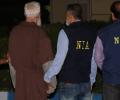
Tahawwur Hussain Rana, a key accused in the 26/11 Mumbai terror attacks, was brought to India on Thursday after being "successfully extradited " from the US, the National Investigation Agency (NIA) said. The 64-year-old Canadian citizen of Pakistani origin landed in Delhi in a special plane on Thursday evening, ending days of speculation of when and how he will be extradited, officials said. The NIA said in a statement that it had secured the successful extradition after years of sustained and concerted efforts to bring to justice the key conspirator behind the 2008 mayhem that claimed 166 lives. Rana is accused of conspiring with David Coleman Headley alias Daood Gilani, and operatives of designated terrorist organisations Lashkar-e-Taiba (LeT) and Harkat-ul-Jihadi Islami (HUJI) along with other Pakistan-based co-conspirators, to carry out the the three-day terror siege of India's financial capital.

Of the 26 requests sent to Canada for extraditing Khalistani terrorists, Ottawa has resolved only five and the rest remain in limbo, India's top envoy to that country has said, calling it the result of 'inaction'.
Additional Solicitor General Gopal Subramaniam, who appeared on behalf of the CBI, assured the court that the agency would file its response on the claim made by Agarwal.
